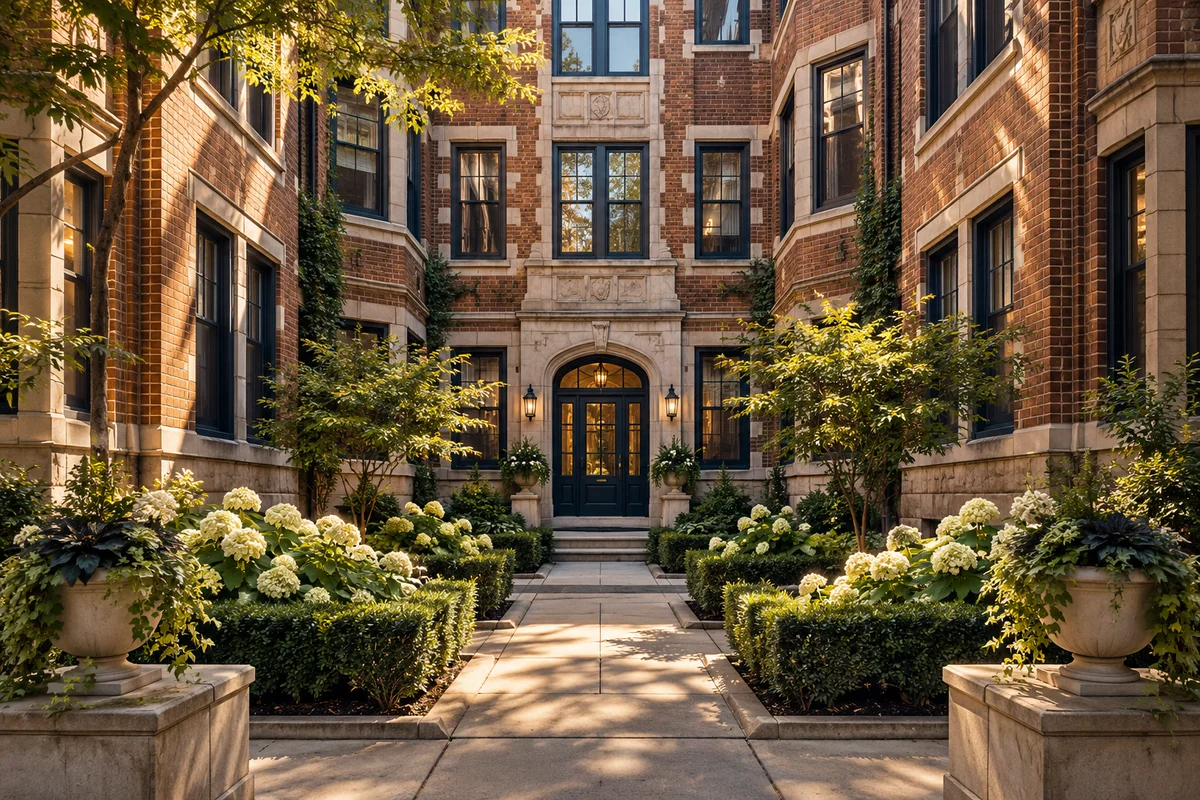
A six-unit apartment building is a commercial multifamily investment whose operating records and physical condition must support its debt and equity. Deferred work can make the first year’s cash substantially weaker than an advertised cap rate suggests. This hypothetical acquisition includes six apartments and no single-family or two-to-four-unit strategy.
The thesis is a properly scoped repair program and durable collections after an operating transition. The buyer funds existing defects at acquisition rather than treating every repair dollar as an unexpected future event. Projected rents are assumptions requiring independent support and lawful implementation in an actual transaction.
All properties, tenants, leases, prices, costs, rates, and outcomes in this case are hypothetical. They are teaching assumptions, not market comparables, actual lender offers, or Jaken-funded transactions.
Acquisition assumptions and balanced funding
| Initial use | Amount |
|---|---|
| Purchase | $1,500,000 |
| Closing and financing costs | $50,000 |
| Physical work | $250,000 |
| Leasing capital | $20,000 |
| Opening operating liquidity | $80,000 |
| Contingency | $70,000 |
| Total uses | $1,970,000 |
| Initial selected debt | $1,000,000 |
| Required equity | $970,000 |
Separate recurring operations from inherited defects
Assume first-year effective revenue of $165,000 and operating costs of $65,000, yielding $100,000 NOI. The model increases NOI to $120,000, $140,000, $150,000, and $155,000. At the terminal condition, hypothetical $234,000 effective revenue less $79,000 expenses produces $155,000 NOI. These are teaching figures rather than neighborhood rent evidence.
Fund $250,000 physical work and $20,000 initial leasing capital. Obtain qualified scopes for roof, facade, mechanical, electrical, plumbing, safety, and apartment conditions as applicable. Separate immediate safety and preservation work from improvements intended to support future income. A percentage-of-price allowance cannot establish whether a particular system is adequate.
The underwriting should reconcile unit-level leases, collections, deposits, concessions, vacancy, bad debt, utility responsibilities, service contracts, taxes, insurance, and management costs. Verify documented unit count and lawful use. A seller’s marketing description is not sufficient evidence that every marketed apartment can legally be occupied.
Fannie Mae’s income-analysis guidance provides a primary multifamily underwriting framework. Its product-specific adjustments must be read in context rather than treated as a promise that this six-unit property qualifies for a particular execution. Fannie Mae income analysis
Two financing structures
The selected illustration is $1,000,000 at 7.0%, with monthly payments, 25-year amortization and a five-year maturity. Monthly payment is $7,068; annual debt service is $84,814. Modeled principal after 60 payments is $911,622. The full commitment is assumed funded at closing; any restricted capital is tracked separately.
The alternative is $1,200,000 at 9.0% interest-only for 2 years, with $108,000 annual interest and $770,000 initial equity against the same uses. Principal remains $1,200,000 at its stipulated maturity without paydowns. The closing-cost allowance is held equal only to isolate structure; real proposals need their own fees, reserves, conditions, and approval.
The larger interest-only alternative preserves $200,000 initial equity but requires repayment in two years. Its higher interest expense and earlier maturity can consume the benefit of lower cash at closing. The takeout must be evaluated against year-two $120,000 NOI and remaining condition issues, not the final projection.
The selected loan amortizes principal and leaves five years before maturity. It requires more initial equity, including the entire repair and liquidity program. Actual underwriting may impose different reserves, repairs, income adjustments, guarantees, or funding conditions.
The OCC handbook provides commercial cash-flow and repayment context. Present the repair schedule and actual net operating cash alongside the loan request; collateral value alone does not pay the first year’s bills. OCC CRE handbook
Five-year cash and funding model
| Year | NOI | Debt service | Recurring replacements | Raw operating cash | Opening reserve used | Cash available before owner allocation |
|---|---|---|---|---|---|---|
| 1 | $100,000 | ($84,814) | ($10,000) | $5,186 | $0 | $5,186 |
| 2 | $120,000 | ($84,814) | ($10,000) | $25,186 | $0 | $25,186 |
| 3 | $140,000 | ($84,814) | ($10,000) | $45,186 | $0 | $45,186 |
| 4 | $150,000 | ($84,814) | ($10,000) | $55,186 | $0 | $55,186 |
| 5 | $155,000 | ($84,814) | ($10,000) | $60,186 | $0 | $60,186 |
The initial $250,000 physical and $20,000 leasing accounts are funded at acquisition and spent over the first two years. They are not deducted again from annual operating cash. A separate $10,000 annual replacement provision is deposited and spent in each year, avoiding an invented accumulated reserve at sale.
Opening operating and contingency funds total $150,000. They cover deficits before additional contributions and return only if unspent. The annual return model assumes positive cash is releasable at year-end; actual loan and ownership rules can retain it.
Build a monthly repair and collection calendar. A vacant apartment under renovation generates no rent while contractors and building expenses still require payment. Do not combine full occupancy revenue with simultaneous comprehensive interior work unless the schedule explains how both occur. Staggering units may preserve cash but extend the program and its management burden.
Additional operating downside
A separate stress assumes $60,000 NOI and $120,000 additional unbudgeted capital in one stressed year. Cash after selected debt, recurring replacements, and that extra capital is ($154,814). Against the full opening operating/contingency balance of $150,000, the model uses $150,000 and requires $4,814 additional equity. This is a separate stress, not a claim that the same reserve remains intact after base-case draws.
The separate stress uses $60,000 NOI and $120,000 additional capital. It can represent weaker collections and a major system issue beyond the initial scope. The calculation shows whether the opening pool covers that isolated scenario and the amount of further support required.
A six-unit building has meaningful single-unit concentration. One vacant apartment represents one-sixth of units, but its share of revenue can differ if units have different rents. Use unit-specific assumptions before translating vacancy into NOI. Property taxes, insurance, heat, and other fixed costs may continue during vacancy.
For a City of Chicago property, verify current rental-law applicability, notices, deposits, maintenance duties, and the proposed work with qualified advice. The city’s residential landlord-and-tenant information is a primary starting point; this example does not establish the legal treatment of a specific building or tenant. Chicago landlord and tenant information
Concrete five-year exit and returns
Assume end-of-year-five sale with forward NOI of $155,000 and 2.5% selling costs. The scheduled-maturity model assumes no additional prepayment charge; actual payoff, taxes, and fees need confirmation.
| Exit calculation | Base cap | Higher-cap sensitivity |
|---|---|---|
| Exit cap | 6.5% | 7.5% |
| Gross price | $2,384,615 | $2,066,667 |
| Selling costs | $59,615 | $51,667 |
| Loan balloon | $911,622 | $911,622 |
| Net equity sale proceeds before reserve return | $1,413,378 | $1,103,378 |
| Remaining reserve returned | $150,000 | $150,000 |
| Total positive equity cash over hold | $1,754,311 | $1,444,311 |
| Total contributed equity | $970,000 | $970,000 |
| Equity multiple | 1.809× | 1.489× |
| Annual model IRR | 13.02% | 8.62% |
The five-year sale assumes completed work and supportable $155,000 forward NOI. The base and higher-cap cases apply hypothetical pricing assumptions, 2.5% selling costs, and the scheduled loan balloon. They are not current Chicago cap-rate evidence.
The full equity basis includes purchase, fees, all initial repair and leasing capital, and opening liquidity. Sale proceeds are separate from return of unused reserves. The resulting IRR and equity multiple are before income taxes, investor-specific fees, and negotiated member allocation.
If repairs remain incomplete, deduct their implications through an appropriately revised income and cost model rather than assume a buyer will pay the stabilized price. A final-year rent roll should reconcile with collections and current condition, not merely list the highest asking rent for each unit.
Diligence and investment decision
Before closing, complete physical inspection, documented unit and use verification, lease and collection review, tax and insurance analysis, and a funded repair plan. Investigate gaps between seller records, observed condition, and the proposed lender presentation.
Compare the purchase with retaining a larger contingency or negotiating a lower price instead of relying on aggressive rent assumptions. An improvement can be necessary to preserve existing cash without producing an immediate rent premium. Its value still matters, but it should not be misclassified as free upside.
Approve only if the all-in equity requirement, monthly schedule, actual legal obligations, and downside support are acceptable. After acquisition, track unit status, collections, work orders, commitments, completed repairs, reserves, and debt compliance. The investment succeeds when the building produces durable cash after its obligations, not when the first marketed cap rate looks attractive.
Price the work in the actual sequence
If a system replacement requires opening finished walls, schedule that work before decorative upgrades. A reversed sequence can require paying for the same finish twice. Identify tenant access, temporary service, contractor mobilization, inspection, and restoration responsibilities in the scope. Compare the funded allowance with a schedule of invoices and completion conditions, rather than simply divide the project budget equally across six apartments. This turns a capital allowance into an executable preservation plan.