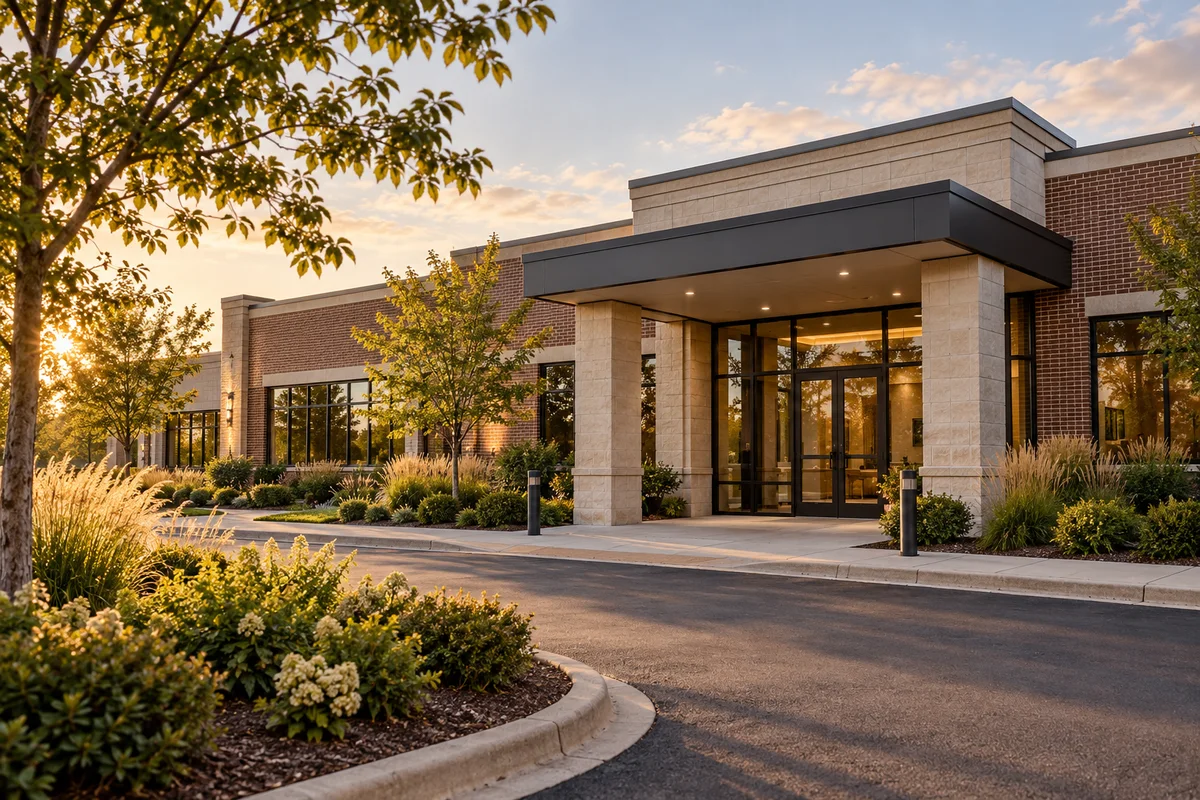
A medical-office label does not eliminate tenant concentration or specialized-space risk. In this hypothetical Chicago-area building, one practice supplies a large share of income and expires during the hold. The buyer must evaluate the actual obligor, service location, lease, and reuse economics rather than assume affiliation with a health system guarantees payment.
The thesis is a useful outpatient property with a funded plan for the major tenant event. The investment should work through the actual lease and physical space, including the capital needed if another medical or ordinary office user replaces it.
All properties, tenants, leases, prices, costs, rates, and outcomes in this case are hypothetical. They are teaching assumptions, not market comparables, actual lender offers, or Jaken-funded transactions.
Acquisition assumptions and balanced funding
| Initial use | Amount |
|---|---|
| Purchase | $3,800,000 |
| Closing and financing costs | $120,000 |
| Physical work | $200,000 |
| Leasing capital | $300,000 |
| Opening operating liquidity | $200,000 |
| Contingency | $100,000 |
| Total uses | $4,720,000 |
| Initial selected debt | $2,300,000 |
| Required equity | $2,420,000 |
Separate the tenant’s name from its obligation
Assume the property produces $370,000 NOI in year one and $390,000 in year two. A major tenant’s expiry and transition reduce year-three NOI to $210,000, followed by recovery to $360,000 and $400,000. These are invented forecasts, not a medical demand or rent study.
The model funds $200,000 physical work and $300,000 leasing capital, spent during the hold around the planned tenant event. Obtain actual scope, tenant delivery requirements, commencement, concessions, and commission terms. A specialized buildout can be useful to one practice and costly to adapt for another.
Healthcare Realty’s 2025 filing provides primary context for outpatient property ownership and tenant-related operations. Its portfolio scale, occupancy, and performance are not used as Chicago comparable evidence here. Healthcare Realty 2025 Form 10-K
Identify the legal tenant and guarantor, actual payment history, financial information available, remaining term, options, and notice rights. Distinguish an affiliate’s name, referral relationship, signage, and binding credit support. Document uncertainty if financial evidence is unavailable instead of substituting a perceived reputation.
Two financing structures
The selected illustration is $2,300,000 at 7.0%, with monthly payments, 25-year amortization and a five-year maturity. Monthly payment is $16,256; annual debt service is $195,071. Modeled principal after 60 payments is $2,096,730. The full commitment is assumed funded at closing; any restricted capital is tracked separately.
The alternative is $2,700,000 at 9.0% interest-only for 3 years, with $243,000 annual interest and $2,020,000 initial equity against the same uses. Principal remains $2,700,000 at its stipulated maturity without paydowns. The closing-cost allowance is held equal only to isolate structure; real proposals need their own fees, reserves, conditions, and approval.
The alternative reduces initial equity by $400,000 but carries more annual interest and a three-year balloon during the modeled weak tenant year. A refinance using year-five stabilized NOI would not describe that actual maturity.
The selected lower-debt five-year loan preserves more time and principal amortization. Its availability remains a teaching assumption, conditional on real lender review of the tenant, lease, reserves, sponsor, and capital plan. A lender may require retention before the expiry.
The OCC handbook provides primary commercial repayment context. Submit the concentration and transition directly rather than relying on a broad medical-office description. OCC CRE handbook
Five-year cash and funding model
| Year | NOI | Debt service | Recurring replacements | Raw operating cash | Opening reserve used | Cash available before owner allocation |
|---|---|---|---|---|---|---|
| 1 | $370,000 | ($195,071) | ($20,000) | $154,929 | $0 | $154,929 |
| 2 | $390,000 | ($195,071) | ($20,000) | $174,929 | $0 | $174,929 |
| 3 | $210,000 | ($195,071) | ($20,000) | ($5,071) | $5,071 | $0 |
| 4 | $360,000 | ($195,071) | ($20,000) | $144,929 | $0 | $144,929 |
| 5 | $400,000 | ($195,071) | ($20,000) | $184,929 | $0 | $184,929 |
Initial physical and leasing accounts are included in uses and are not deducted again from annual cash. Recurring replacement funding is assumed spent each year. Negative operations first use opening liquidity; unused balances return only at exit under the model assumptions.
The annual cash may appear smoother than the real tenant event. A replacement might need alterations before possession, while the departing practice stops paying earlier. Model monthly invoices, rent commencement, allowances, and lender releases to identify peak liquidity.
Cash shown as available is assumed released for model returns, not promised to members. Actual debt restrictions, ownership preferences, fees, and retention can change distributions. A strong NOI year before expiry can reasonably be retained for the coming delivery obligation.
Additional operating downside
A separate stress assumes $100,000 NOI and $250,000 additional unbudgeted capital in one stressed year. Cash after selected debt, recurring replacements, and that extra capital is ($365,071). Against the full opening operating/contingency balance of $300,000, the model uses $300,000 and requires $65,071 additional equity. This is a separate stress, not a claim that the same reserve remains intact after base-case draws.
The separate stress assumes $100,000 NOI and $250,000 additional capital beyond the original funded scope. It tests a weaker reuse path or longer concentration loss. The opening-reserve comparison is isolated; prior operating or capital uses can reduce actual remaining funds.
Review the premises with appropriate technical and legal advisers. Medical equipment, layout, mechanical needs, access, parking, code, licenses, and the proposed next use can affect delivery and budget. This case does not assert a particular healthcare licensing or reimbursement rule.
BXP’s 2025 filing offers a complementary primary office-leasing reference for evaluating concessions and landlord obligations. Its figures do not estimate a medical buildout for this subject. BXP 2025 Form 10-K
Concrete five-year exit and returns
Assume end-of-year-five sale with forward NOI of $400,000 and 2.0% selling costs. The scheduled-maturity model assumes no additional prepayment charge; actual payoff, taxes, and fees need confirmation.
| Exit calculation | Base cap | Higher-cap sensitivity |
|---|---|---|
| Exit cap | 7.5% | 8.5% |
| Gross price | $5,333,333 | $4,705,882 |
| Selling costs | $106,667 | $94,118 |
| Loan balloon | $2,096,730 | $2,096,730 |
| Net equity sale proceeds before reserve return | $3,129,937 | $2,515,035 |
| Remaining reserve returned | $294,929 | $294,929 |
| Total positive equity cash over hold | $4,084,582 | $3,469,680 |
| Total contributed equity | $2,420,000 | $2,420,000 |
| Equity multiple | 1.688× | 1.434× |
| Annual model IRR | 11.98% | 8.18% |
The terminal value assumes the stipulated income is collectible and the leasing program is complete. The higher-cap sensitivity changes pricing alone. If the major tenant remains unresolved, update NOI, capital, buyer demand, and timing rather than apply the restored income automatically.
The full initial equity basis includes costs, work, leasing, and reserves. Model cash uses year-end timing and returns remaining opening liquidity. It excludes income taxes, investor-specific fees, and an actual waterfall, so it is not an individual member’s net return.
Medical-office pricing can depend on actual tenancy and building utility. The case’s cap rates are chosen assumptions, not current Chicago quotations or a claim of a medical premium. Verify relevant transactions and income definitions for a real exit.
Diligence and investment decision
Before closing, create a concentration map by rent, area, guarantor, practice ownership, and expiry. Several suites with related practices may not represent independent credit. Obtain the complete lease and amendments, not just the practice’s public description.
Evaluate renewal economics against replacement. A renewal with a different rent or improvement package might preserve more cash than a higher-rent new lease after vacancy and specialized work. Use actual proposal terms and dated cash flows.
Confirm the building’s physical and legal suitability for likely alternatives. For a Chicago-area property, research the exact jurisdiction and parcel. Do not assume an institutional campus relationship resolves access, parking, easements, title, or use restrictions without documents.
Approve only if tenant evidence, realistic reuse scope, financing maturity, and available capital support the transition. Require a committed response to the separate stress and a decision deadline before the lease event. If the acquisition depends on unsupported institutional credit or inexpensive reuse, adjust price or decline.
After closing, track notices, tenant financial information available, renewal discussions, delivery alternatives, capital commitments, reserves, loan tests, and takeout readiness. The useful asset-management question is what happens if the specific tenant leaves, rather than whether the property belongs to a generally favored sector.
The base return and higher-cap sensitivity differ materially, while the separate operating stress requires more equity after opening reserves are used. Approval should therefore include an actual funding commitment for that stress, not only an attractive sector narrative.
For the tenant review, request information proportionate to the exposure through an appropriate confidential process. Document what was received, what remains unknown, and whether a guarantee actually supports the rent. A practice’s clinical reputation does not replace an assessment of the contracting entity’s payment capacity. If that evidence is unavailable, show a replacement case and price the uncertainty explicitly rather than invent a credit rating or treat the name on the door as the obligor.