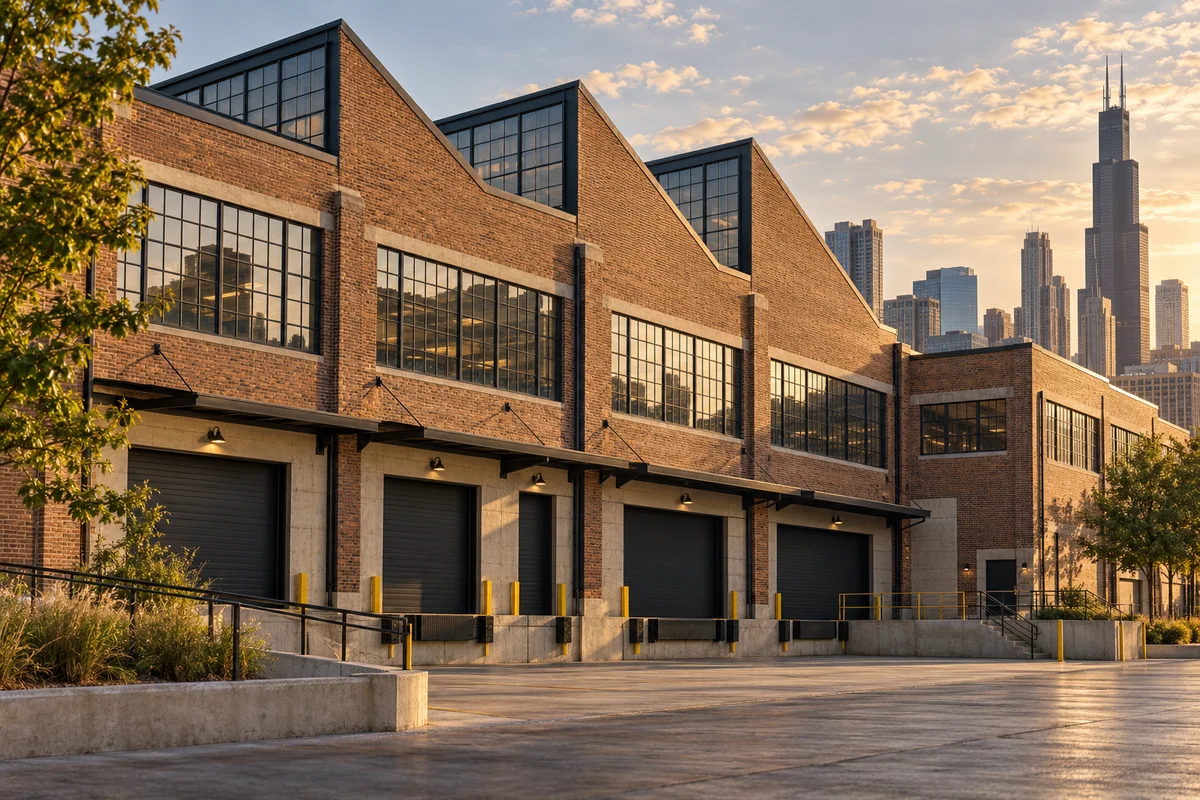
An industrial investor should price the signed lease’s actual allocation of operating costs, capital work, maintenance, casualty, and surrender. Terms such as gross, modified gross, and NNN are useful shorthand, but they do not determine every obligation or make a landlord’s cash flow predictable without reading the contract.
The investment file should connect each material obligation to an estimated cost, timing, collection mechanism, tenant credit, and residual property condition. Counsel must interpret the actual documents and applicable law. The examples below are hypothetical.
Build an obligation matrix
Create a row for roof, structure, exterior walls, slab, paving, drainage, loading equipment, HVAC, electrical service, plumbing, fire protection, landscaping, snow removal, insurance, taxes, utilities, and environmental matters as relevant.
For each, identify who maintains, repairs, replaces, pays, insures, approves, and provides access. Record the lease section and any amendment that changes it. Some obligations may be split; for example, a tenant might maintain equipment while replacement remains with the landlord.
Do not use the seller’s expense statement as the sole evidence of allocation. A seller may have paid an expense voluntarily, failed to bill a recoverable cost, or deferred a project. Historical payment and contractual responsibility should be reconciled.
Ask which obligations survive expiration and what happens after default. A tenant promise is useful only to the extent the tenant performs or the owner can recover. The landlord may need to fund urgent work before a contractual dispute is resolved.
Separate direct payment from reimbursement
A tenant may pay a vendor or utility directly, or the landlord may pay and seek recovery. Those arrangements have different administration and working-capital effects. Model the actual mechanism.
For reimbursements, review definitions, exclusions, allocation, caps, base years, notice, estimates, reconciliation, audit rights, payment deadlines, and disputes. A broad cost category may contain important limits. The lease abstract should show the economics, not merely quote a section title.
Keep revenue and expense accounting consistent. If recoveries are included as income, include the corresponding landlord expense. If a tenant pays a bill directly, do not automatically invent offsetting revenue and expense without explaining the comparison convention.
Vacancy and collection loss can create leakage even in a net-lease property. A departed tenant does not reimburse empty space, and a financially weak occupant may dispute or fail to pay charges.
Investigate capital work explicitly
Determine how the lease treats replacement, improvement, code-related work, and capital expenditures. Some provisions may allow amortized recovery, interest, or particular categories; others may exclude them. Counsel should evaluate the actual language.
A roof replacement can be a large owner obligation even where ordinary maintenance is passed through. Conversely, an apparently owner-paid project may have a recoverable component if the lease supports it. Avoid universal rules based on marketing labels.
Obtain a physical condition assessment to estimate actual need and timing. The contract allocates cost; it does not tell the investor whether the roof or pavement needs replacement soon. Combine legal and engineering diligence.
Chicago’s official construction-code resources are relevant when evaluating work at Chicago properties. The lease’s allocation does not eliminate public requirements or establish the scope needed for a repair or alteration. Chicago Construction Codes
Two filed industrial leases show contrasting negotiated details: an AMB lease permits specified amortized capital recovery, while a Catellus lease separates owner structural repair from tenant system duties. Neither is a Chicago default rule. AMB Section4.2, Catellus Sections10–11.
A hypothetical recovery gap
Assume an industrial property has annual base rent of $240,000. Landlord-paid operating expenses are $90,000, and the model assumes $75,000 of tenant recoveries. Before other adjustments, NOI is $225,000.
Lease review shows $12,000 of the assumed recoveries are excluded and $8,000 are not collectible during an expected vacancy. Corrected recoveries are $55,000 and NOI is $205,000. The $20,000 difference is a recurring underwriting adjustment if the conditions persist.
A separate $180,000 roof replacement is scheduled in year two. Suppose only $60,000 is recoverable over time under the actual lease structure, subject to professional interpretation and collection. The owner still needs initial cash for the full project unless financing or tenant prepayment provides it.
At a hypothetical 8% capitalization assumption, the recurring $20,000 NOI difference corresponds to $250,000 of value sensitivity. The roof is a separate capital and timing issue; deducting it once and then also treating the full amount as a perpetual annual NOI reduction would double-count the burden.
Evaluate tenant alterations and specialized equipment
Industrial tenants may install cranes, mezzanines, pits, process piping, refrigeration, heavy electrical distribution, or other improvements. Determine approval rights, ownership, maintenance, insurance, liens, removal, and restoration.
Ask whether installations were permitted and documented. Public building records can identify questions, but the City’s records agreement disclaims completeness and accuracy. An absence of records is not proof of compliant work or noncompliance by itself. Chicago building records
At acquisition, inspect the lease’s surrender provisions and compare them with actual installations. A future removal obligation may be difficult to enforce after tenant distress. Model a fallback cost if the landlord must remove or adapt the improvements.
Do not value tenant-owned equipment as real estate without establishing ownership and transfer. A buyer can pay for an attractive fitted-out building and later discover important components leave with the tenant or are subject to another lender’s rights.
Review casualty, interruption, and restoration
Identify insurance requirements, deductibles, claims administration, restoration duties, rent abatement, termination rights, and treatment of proceeds. Counsel and the insurance team should reconcile the lease with actual policies.
A tenant’s obligation to insure may not cover every landlord exposure. Ordinary property coverage, business-income coverage, equipment breakdown, flood, and pollution matters can differ. Avoid assuming one policy label resolves all events.
Model the cash sequence after a serious loss. The owner may pay deductibles, emergency costs, debt service, and unrecovered expenses before insurance proceeds arrive. Rent may abate or the tenant may have termination rights.
Inspect the lender’s loan documents too. Requirements for proceeds, restoration, reserves, and consent can affect the owner’s options. The property model should not assume insurance cash is freely distributable.
Test credit behind the obligations
A lease shifting major responsibilities to a weak tenant may provide less protection than a lease with a strong payer and clear administration. Review financial capacity, payment history, deposits, guarantees, and concentration.
If the tenant must replace a major system near expiration, ask whether it has an economic incentive and ability to do so. The landlord may inherit deferred work even when the contract says otherwise. Inspection rights and enforcement history matter.
Public industrial-owner disclosures discuss leasing and capital risks. Use them as a reminder to evaluate both contractual rent and the cost of preserving rentable assets rather than assuming net leases remove owner exposure. STAG 2025 annual report, pages 20 and 49–50
For related-party leases or sale-leasebacks, analyze whether the arrangement reflects supportable rent and credible obligations. A seller can allocate costs on paper more easily than its business can fund them over time.
Model cash timing and disputes
Estimated monthly reimbursements may differ from actual annual expense. Set a reconciliation process and retain supporting records. Late or disputed billing can create both collection risk and tenant dissatisfaction.
If the owner funds capital and recovers it over several years, the model needs the initial outflow, recovery schedule, tenant expiration, and collection assumptions. Do not treat the project as immediately reimbursed simply because some portion is ultimately recoverable.
Include administrative cost. Complex recovery provisions require bookkeeping, lease interpretation, and documentation. A small property can have disproportionately high cost if every lease uses different definitions and allocation methods.
Track unresolved disputes separately from ordinary receivables. A balance that has remained contested for years should not be modeled like timely recurring rent without explanation.
Audit one actual reconciliation before relying on the process
Select a completed billing year and reproduce a tenant’s recovery from invoices through the eligible pool, allocation, adjustments, bill, and payment. Compare the result with the seller’s income statement and receivables.
This exercise can reveal issues a lease abstract alone misses: an excluded charge included in the pool, a missing tenant credit, a denominator inconsistent with the document, or an amount billed but never collected. Expand the sample when the differences are material.
Ask who performs the calculation after closing and what software or records transfer. A recoverable expense can still leak when administrative knowledge remains with the seller. Include the recurring cost of competent billing in normalized operations and preserve a clear audit trail for tenants, lenders, and future buyers.
At closing, obtain the underlying invoices and reconciliation workbooks, not only final tenant bills. Those records help the new manager explain credits, disputed charges, and the next annual true-up.
Use the matrix in acquisition and ownership
Before the investigation deadline, reconcile material obligations with the capital report and operating model. Identify any price adjustment, reserve, seller repair, or contractual condition needed for the acquisition.
During ownership, use the matrix for budgeting, work orders, billing, and tenant notices. Update it after amendments or new leases. A good abstract loses value when the operating team never sees it.
At refinance or sale, provide a clear bridge from lease obligations to actual expenses, recoveries, and future capital. The investor’s advantage is an explainable cash flow supported by documents and realistic performance, not a favorable lease label alone.