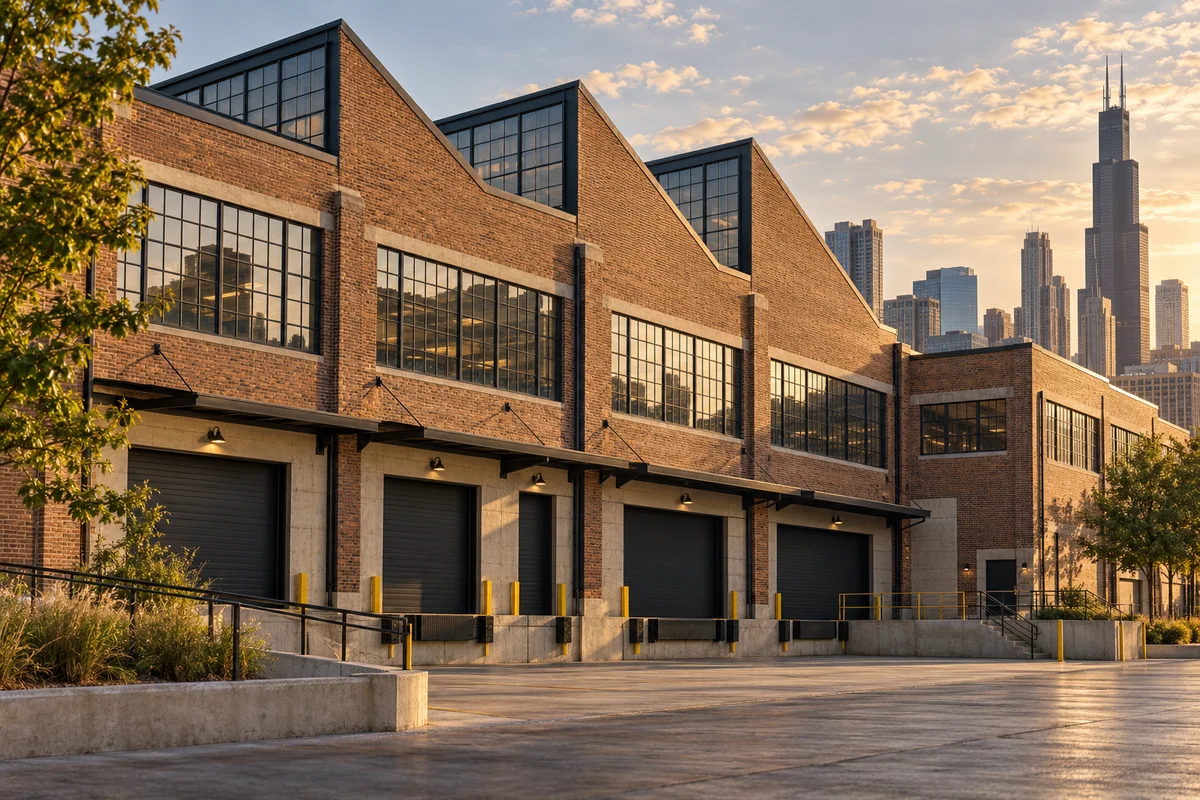
An industrial sale-leaseback converts an owner’s property into cash and a continuing lease obligation. The investor should evaluate whether the operating business can sustain the rent and capital duties, whether the property supports that rent in the market, and what happens if the business fails or leaves.
A long lease and attractive initial yield do not replace tenant-credit analysis or residual real estate underwriting. The examples below are hypothetical and do not establish market cap rates, coverage requirements, or the legal effect of a particular lease.
Reconstruct the transaction’s purpose
Ask why the seller is releasing real estate capital and how proceeds will be used. Growth investment, debt repayment, ownership liquidity, acquisition funding, and financial distress create different contexts.
Identify the legal seller, tenant, guarantor, parent, affiliates, and any related-party arrangements. A recognizable trade name may not be the entity obligated under the lease. Counsel should confirm structure and enforceability.
Understand whether the transaction changes business debt, working capital, or operating costs. A buyer should not analyze pre-transaction earnings as though the new lease expense already exists. The sale changes the capital structure and fixed obligations.
Request financial statements, interim results, cash-flow information, debt schedules, customer concentration, capital needs, and management explanations appropriate to the business. Where information is unavailable, identify the uncertainty and price or structure it deliberately.
Test rent after normalizing the business
Begin with a clearly defined measure of business earnings and reconcile adjustments. Remove or explain one-time items, related-party effects, owner compensation, unusual subsidies, and other distortions through qualified financial review.
Subtract the proposed rent and consider other recurring fixed costs, maintenance investment, taxes through advisers, working-capital needs, and debt service. A simple earnings-to-rent ratio can be informative but is not a complete cash-flow analysis.
Do not accept a large rent increase solely because it produces the seller’s desired proceeds at a target yield. Sustainable rent must be supported by the business and the property market.
Stress lower revenue, margin compression, customer loss, and required reinvestment. The business and property can weaken together, especially when alternative tenants serve the same industry.
A hypothetical coverage analysis
Assume normalized annual business earnings before the new property rent are $1.2 million under a stated accounting convention. Proposed annual rent is $400,000. The simple pre-rent earnings-to-rent ratio is 3.0 times.
After rent, $800,000 remains before other items excluded from that earnings measure. Suppose recurring equipment reinvestment is $250,000 and business debt service is $300,000. Remaining cash before taxes, working-capital changes, and other adjustments is $250,000.
A 20% decline in the original $1.2 million earnings reduces it to $960,000. After the same rent, equipment reinvestment, and debt service, only $10,000 remains before the other adjustments. The headline 3.0-times ratio did not show the full fragility.
The example is not a prescribed credit method. It illustrates why an investor must define the earnings measure and examine the cash obligations it excludes.
Compare contract rent with market rent
Research what independent users would pay for the building’s actual size, condition, power, loading, location, and flexibility. Include concessions, improvements, commissions, lease term, and expense allocation.
If sale-leaseback rent exceeds supportable market rent, separate the contractual income premium from residual property value. The premium depends on tenant performance and lease enforceability; it may disappear at default or expiration.
A buyer paying $5 million for $400,000 rent should not assume a new tenant will support the same income. If market-supported NOI after departure is $280,000 and the hypothetical exit cap rate is 8%, a simplified stabilized indication is $3.5 million before reletting costs and timing.
Public industrial-owner filings discuss competition, concessions, and reletting exposure. Use those categories to evaluate the lease’s end rather than treating its initial term as the entire investment. STAG Industrial 2025 annual report
Abstract capital and maintenance duties
Identify responsibility for roof, structure, slab, paving, utilities, loading equipment, fire protection, environmental obligations, and specialized systems. Review maintenance, replacement, approval, insurance, and surrender separately.
A tenant can promise to maintain a building while deferring work under financial pressure. Obtain condition reports and a capital schedule at acquisition. Ask how inspections, reporting, and enforcement work during the lease.
Determine who owns machinery and improvements. Tenant-owned equipment may leave or be subject to other lenders’ rights. The investor should not pay real estate value for assets it does not acquire.
A filed Catellus industrial net lease separates structural owner repairs from tenant maintenance and replacement. The example shows why allocation requires the actual clauses; it is not a sale-leaseback standard. Filed lease Sections10–11
Review escalations and options
Annual rent increases should be tested against the business’s likely capacity and market alternatives. An escalation that looks favorable to the landlord can increase future default or renewal risk if it outpaces sustainable economics.
Review renewal, purchase, refusal, assignment, subletting, contraction, and termination rights with counsel. A long stated term can have material qualifications. A purchase option can affect sale flexibility or upside.
Identify guarantees, deposits, letters of credit, or other support and their actual conditions. The name of a security instrument does not establish collectability, duration, renewal, or remedies. Model the protection actually available.
For multiple related properties, examine cross-default, cross-collateralization, and allocation. Portfolio provisions can improve some protections while complicating partial sales or negotiations.
Normalize property expenses and taxes
Reconstruct landlord expenses even where the seller previously paid through its operating company. Review insurance, management, legal administration, reserves, and any costs not passed to the tenant.
For a Cook County property, use official parcel records and qualified advice for future tax assumptions. The Assessor’s valuation explanation provides context but does not turn the sale price into a guaranteed tax bill. Cook County commercial valuation
If taxes are recoverable, evaluate collection and tenant occupancy-cost exposure. Higher charges can affect business coverage even when landlord NOI initially appears protected.
Model capital spending and reserves below NOI where appropriate without excluding them from investor returns. The distinction is accounting presentation, not an excuse to ignore cash needs.
Underwrite a tenant failure
Estimate the period without rent, unrecovered expenses, legal and administrative costs, security, insurance changes, repairs, removal, environmental follow-up, improvements, commissions, and new lease concessions.
Determine whether the building can serve other tenants as it exists. A specialized production layout may require significant adaptation. A location valuable to the seller’s customer network may be less useful to a replacement.
Do not assume the investor can immediately take possession or use deposits to cover every cost. Counsel must analyze remedies and timing under the actual documents and circumstances. The financial model should include a realistic delay and sufficient liquidity.
Test the loan simultaneously. Debt service continues under the relevant terms, and a lender may impose cash controls or other consequences. A property-level loss can become an equity funding problem before a final disposition occurs.
Evaluate proceeds use and post-closing liquidity
Ask for a sources-and-uses schedule showing what the business receives after debt payoff, fees, distributions, required investment, and other commitments. A large gross sale price does not establish a well-capitalized tenant after closing.
For a hypothetical $5 million sale, repayment of $3 million business-related property debt, $200,000 transaction cost, and a $1.3 million owner distribution leaves only $500,000 before other uses. If the operating business needs $800,000 of working capital and equipment investment, the transaction may not provide the cushion implied by the headline proceeds.
The exact structure and obligations require professional review, but the investment question is straightforward: does the newly rent-paying tenant have enough liquidity to operate and meet its lease duties after the cash is allocated?
Request a post-transaction forecast and reconcile it with historical financials. Stress slower collections, inventory needs, margin changes, and scheduled equipment spending. If management plans to use proceeds for expansion, evaluate the execution risk rather than assuming growth immediately increases rent coverage.
For partners, explain whether the underwriting relies on current operations or the success of a new business plan funded by the sale. The latter may be acceptable, but it is additional credit exposure that should affect price, security, reserves, and the willingness to rely on above-market contractual rent.
Separate future growth projections from the tenant’s cash resources available immediately after closing.
Match price and leverage to both risks
Separate tenant-credit risk from real estate risk in the investment memo. Explain which part of the return comes from contracted above-market income, which from the underlying building, and which from assumed appreciation or refinancing.
Obtain financing based on the lender’s actual underwritten cash flow and reserves. A long lease can help, but tenant quality, specialized use, market rent, and remaining term at maturity still matter.
Do not solve a weak deal only by increasing leverage. More debt can improve an optimistic equity IRR while reducing the ability to survive a business downturn or reletting event.
Proceed when sustainable rent, credible credit, real estate utility, legal documents, and capital reserves support the same thesis. Reprice or restructure when protection is incomplete. Decline when the yield depends on rent the tenant cannot sustainably pay or residual value the property cannot support.